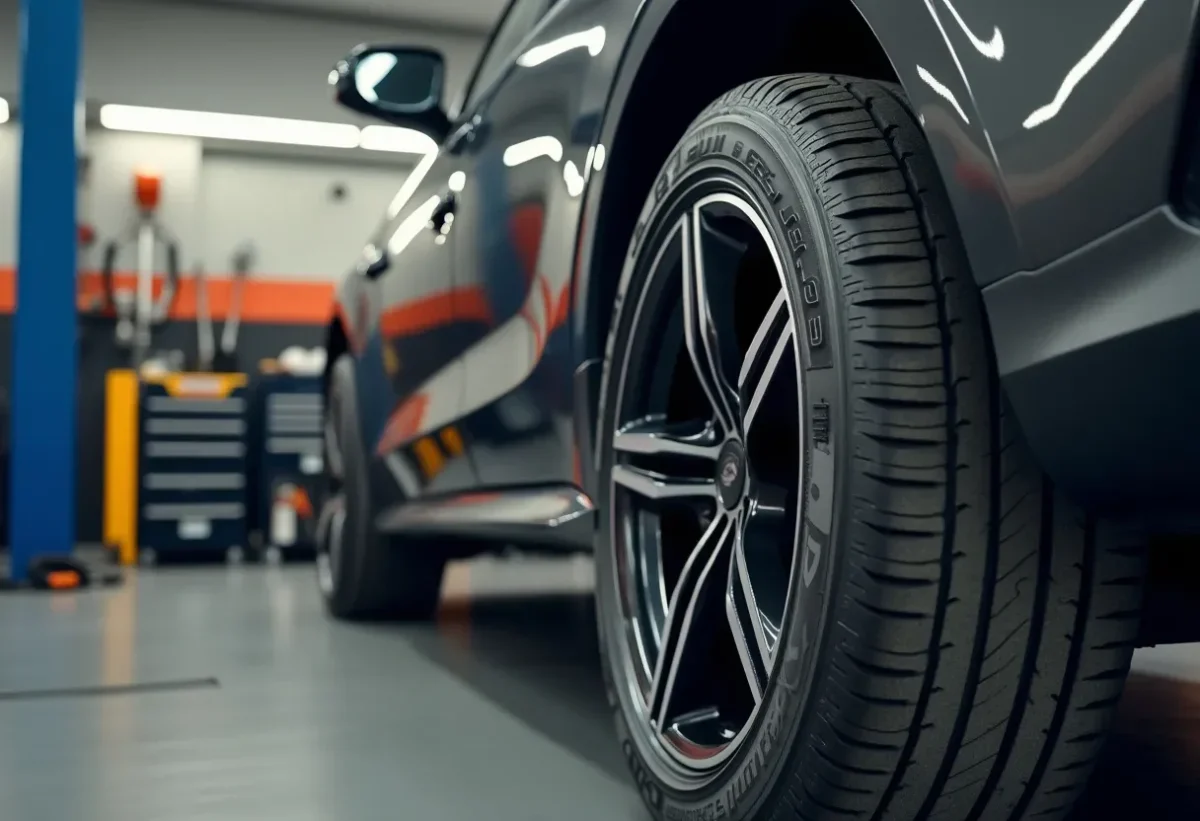
Finding the perfect tire for your vehicle can seem complex with the variety of options available. Between all-season models, winter tires, and those reserved for sports performance, each type meets specific needs.
Selection criteria, such as durability, grip, or energy efficiency, play a fundamental role in the final decision. The characteristics of the vehicle and the usual driving conditions strongly influence the choice. You need to understand these specifics well to ensure safety and comfort on the road.
The different types of tires and their characteristics
To choose the right tire for your vehicle, you need to understand the different types of tires and their specifics. The options are numerous, and each type of tire meets particular needs.
All-season tires
All-season tires are designed to provide balanced performance throughout the year. They combine features suited for both summer and winter conditions, without excelling in either. They are ideal for drivers in regions with a moderate climate.
Winter tires
Winter tires, also known as snow tires, are specially designed for cold and snowy conditions. Their rubber composition remains flexible at low temperatures, improving grip on snow and ice. They are essential for regions where winter is harsh.
Performance tires
Performance tires are intended for sports vehicles or drivers seeking a dynamic driving experience. Their design allows for excellent grip and quick response in turns, but their durability may be lower compared to other types of tires.
Tubeless and runflat tires
Tubeless tires, which do not have an inner tube, are equipped with an integrated inflation valve, reducing the risk of slow punctures. As for runflat tires, they allow you to drive after a puncture, providing extra peace of mind.
- All-season tires: balanced performance for all conditions.
- Winter tires: flexibility at low temperatures for better grip.
- Performance tires: increased grip and responsiveness for sporty driving.
- Tubeless tires: integrated inflation valve, reducing the risk of slow punctures.
- Runflat tires: ability to drive after a puncture.
Find the T or H tire suitable for your vehicle by considering these characteristics. Understanding these specifics will guide you towards an informed choice, ensuring safety and performance on the road.
The essential criteria for choosing your tires
To ensure the safety and performance of your vehicle, several criteria must be considered when choosing your tires. Selecting the right tire directly impacts traction, steering, and braking.
Dimensions and indices
The dimensions of the tire, indicated on the sidewall, are crucial. They include the width, height, and diameter of the rim. The load index and speed index are major indicators. Consider these parameters to ensure perfect compatibility with your vehicle.
- Load index: maximum weight capacity supported by the tire.
- Speed index: maximum speed at which the tire can safely operate.
Energy efficiency and labeling
Energy efficiency is another determining factor. A tire with low rolling resistance reduces fuel consumption and greenhouse gas emissions. The European tire labeling provides information on performance in terms of energy consumption, wet grip, and external rolling noise.
Wear and maintenance
Regular tire maintenance extends their lifespan and improves fuel economy. Use a tire wear tester to check for signs of wear and maintain tire pressure at an optimal level. Properly aligned wheel alignment is also fundamental to avoid premature wear.
| Criterion | Description |
|---|---|
| Dimensions | Width, height, rim diameter |
| Load index | Maximum weight capacity |
| Speed index | Safe maximum speed |
Understanding these criteria will allow you to choose the tire best suited to your needs, thus ensuring a safe and efficient driving experience.