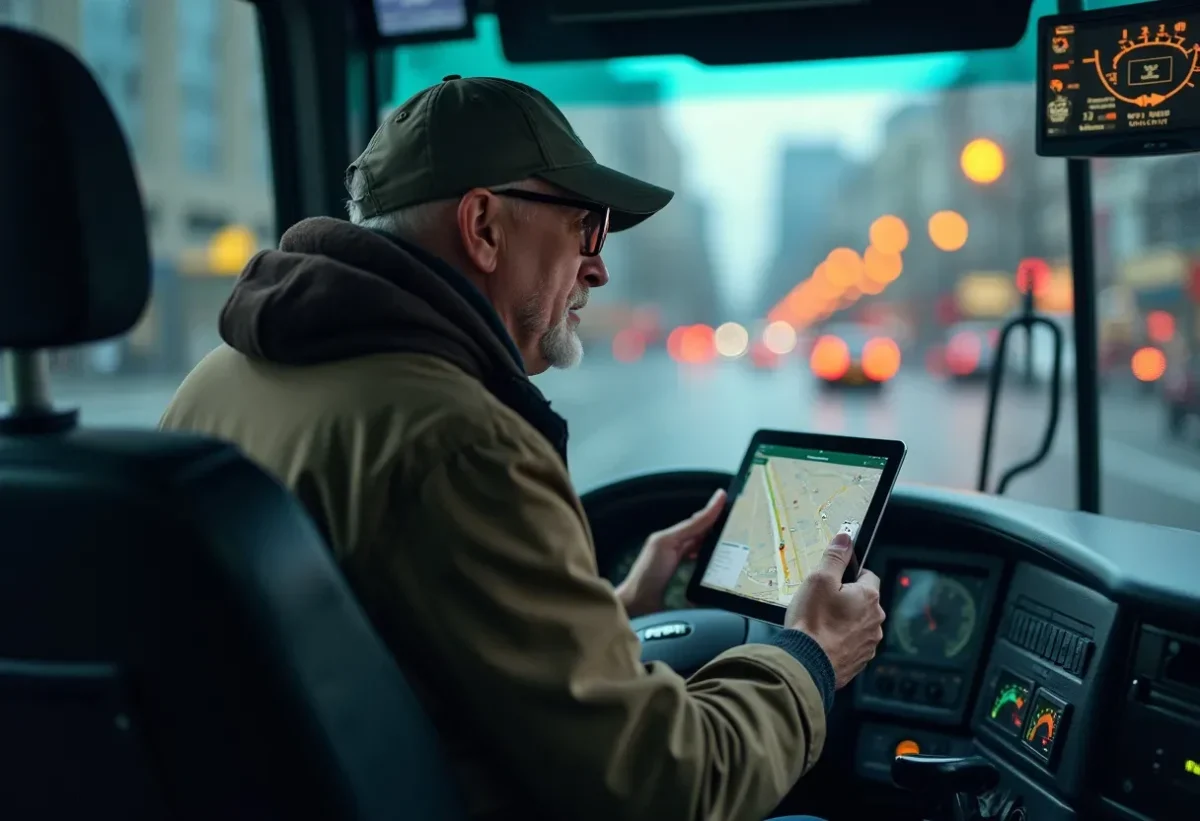
Transport employees are seeing their daily lives transformed thanks to digitalization. New technologies allow for better management of schedules and routes, thereby reducing stress and human errors. Mobile applications and online platforms provide real-time information, facilitating quick and effective decision-making.
Internally, digital communication and collaboration tools enhance coordination among teams. Online training offers opportunities for continuous learning, enabling employees to stay updated with the latest innovations. Digitalization thus becomes a valuable ally in improving working conditions and optimizing performance.
Digital tools serving transport employees
The digital transformation within transport companies relies on a series of innovative tools and platforms. At RATP, for example, the collaborative platform Urbanweb RATP plays a central role. It provides employees with a digital space where they can share information, track updates in real-time, and collaborate more smoothly.
Key players in digitalization
Frédéric Tran Kiem, director of digital, information systems, and innovation at RATP, emphasizes the structuring impact of these technologies. Jean-Yves Cloitre, head of the Performance and Supply Chain unit, reinforces this vision by stressing the improvement of operational efficiency made possible by these tools.
- Urbanweb RATP: a collaborative platform for employees.
- TRAD. IV. IA: a multilingual passenger information service, facilitating communication with users.
Cross-cutting initiatives
Jérôme Bour, president of DDS and member of the Digital and Technologies Lab, works towards the integration of these tools within France Supply Chain, which brings together over 150 companies. Geoffrey Thiery, also a member of the Lab, actively participates in this collective dynamic.
These initiatives demonstrate the importance of digital tools in improving internal communication and service efficiency. Digitalization is not limited to RATP. Organizations like ENGIE use solutions like Smartparking to optimize parking space management, while Le Roy Logistique and Depaeuw adopt Steeple for internal communication.

The concrete benefits of digitalization for internal resources
Digitalization profoundly transforms the management of internal resources. It allows for the optimization of processes and improves quality of life at work. Take, for example, the Employer Mobility Plan (PDMe), mandated by the Mobility Orientation Law (LOM). This plan encourages companies to adopt digital solutions to facilitate employee travel.
Improvement of quality of life at work
The digital transition promotes remote work, accelerated by the Covid-19 health crisis. This flexibility reduces travel times and improves the balance between professional and personal life. Internal communication tools, like those used by RATP, enable better collaboration despite distance.
- Remote work: increased flexibility and reduced commutes.
- Internal communication: fluidity and efficiency of exchanges.
Process optimization and employee engagement
The digitalization of services also allows for more efficient management of projects and resources. By using collaborative platforms like Urbanweb, employees can track project progress in real-time and contribute proactively.
Key performance indicators (KPIs) are now more easily accessible, allowing for precise tracking and quick decision-making. This transparency enhances employee engagement, as they feel more involved in decision-making processes.
- Project management: real-time tracking and proactive contribution.
- Key performance indicators: precise tracking and quick decisions.
Digitalization is not limited to large companies. In Mulhouse, the Mobility As A Service (MaaS) system facilitates urban travel, demonstrating that the digital transition can benefit all levels, from local to national.