
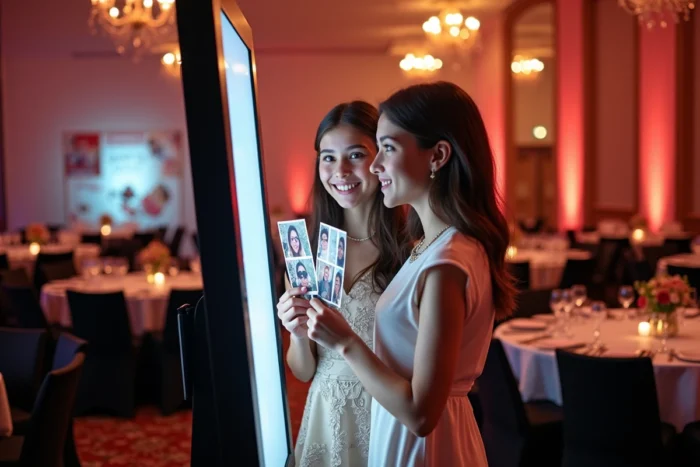
The magic mirror photobooth has established itself in the Marseille event landscape in recent years, driven by a demand that goes beyond just weddings. Corporate events, birthdays, product launches: the format is appealing because it combines photography, an interactive touchscreen, and instant printing in a single device. However, choosing such entertainment in Marseille raises questions rarely addressed by local providers, particularly regarding GDPR compliance, environmental sustainability, and the actual accessibility of the device.
Consent and image rights: what GDPR requires from the magic mirror photobooth
A magic mirror photobooth captures faces, prints them, sends them via email or SMS, and sometimes shares them on the provider’s or organizer’s social media. Each step involves the processing of personal data as defined by GDPR.
The CNIL reminds us, in its practical guides updated in 2023, that photography devices at events must provide clear information about the use of photos, an option to opt-out, and guidelines for sharing on social media. Serious providers now integrate explicit consent options on the mirror’s screen before any email or SMS sending.
When choosing a provider for the magic mirror photobooth animation in Marseille, checking for this consent mechanism is a more reliable selection criterion than just the mirror’s design or the number of accessories provided.
- The screen must display an information message before taking a photo, specifying who collects the data and for what purpose.
- The guest must be able to refuse digital sending while keeping their paper print.
- The provider must contractually commit to the duration of data retention and the deletion of files after the event.
These obligations apply regardless of the type of event, whether a wedding or a corporate party. Feedback from the field varies on this point: some Marseille providers offer this feature as standard, while others charge extra for it or do not include it at all.

Magic mirror photobooth and event sustainability in Marseille
Since 2023, several event agencies in Marseille and nationally have explicitly requested “low-consumption” and “reusable” animations rather than disposable ephemeral decorations. The magic mirror fits into this logic: one single device replaces several decorative and entertainment elements that would otherwise be produced for single use.
The mirror format has a concrete advantage over traditional closed-cabin photobooths. The structure is more compact, transport requires less volume, and the device can be reinstalled from one event to another without loss of equipment. Photo prints remain the main consumable item, but some providers now offer a 100% digital mode (sending via QR code) for organizers who wish to limit paper prints.
The available data does not allow for conclusions about the actual environmental impact compared to other animations (DJ, flower wall, candy bar). However, the reusability of the mirror is a measurable argument: a provider that uses the same equipment at several dozen events per year amortizes the manufacturing footprint much faster than a custom-made decoration for single use.
Accessibility of the magic mirror for all guests
Since the implementation of enhanced accessibility obligations for establishments receiving the public, the question also arises for animations installed in these venues. A magic mirror generally measures more than one meter fifty in height, with a touchscreen positioned at adult standing height.
For an event welcoming wheelchair users, children, or short individuals, the height of the touchscreen becomes a technical criterion to check before any booking. Some models have an adjustable stand, while others do not. Providers rarely mention this feature in their online offers.
The interface itself deserves attention. A touchscreen with sufficiently large buttons, marked contrasts, and readable instructions facilitates use by guests who are not familiar with digital tools. The experience of a magic mirror relies as much on the quality of the interface as on the resolution of the camera.
Social media strategy and magic mirror photobooth in Marseille
The link between photo animation and communication strategy on social media remains poorly articulated in the content of local providers. The magic mirror, however, produces a very specific type of content: portrait-format photos, often with a custom frame in the colors of the event or brand, that can be shared immediately.
For a corporate event, this format corresponds exactly to the dimensions of Instagram stories and vertical posts. The magic mirror turns each guest into a communication relay if the graphic frame includes the logo or hashtag of the event. The Marseille Tourism and Congress Office has documented this trend in its 2023 MICE report.
For a wedding, the stakes are different, but the mechanics remain the same: guests spontaneously share photos on their own networks, creating a collective album in real-time, complementing the work of the professional photographer.
What distinguishes the mirror from other photobooth formats
The magic mirror is not the only format available in Marseille. Compact selfie kiosks, closed-cabin photobooths, and ring lights with printing also exist. The difference lies in three elements: the size of the screen (which allows for visual animations before and after the photo is taken), direct tactile interaction with the mirror, and the aesthetic of the device that integrates into high-end reception venues without visual disruption.
The choice between these formats depends on the venue, the number of guests, and the budget. A magic mirror occupies more space than a compact kiosk and requires a stable power supply. For outdoor events along the Marseille coastline, ambient light and weather conditions can also influence the quality of the shots.
The magic mirror photobooth in Marseille meets a real demand, but its choice should be guided by concrete criteria (GDPR compliance, accessibility, compatibility with the venue) rather than just the promise of original entertainment. Providers who document these technical aspects in their offerings facilitate the decision-making process for organizers.