
Domestic cats, those feline companions that so many households cherish, have eating habits that often intrigue their owners. Beyond their mysterious airs and natural grace, these small carnivores often show a marked preference for kibble. This inclination raises questions about their diet and the reasons behind this preference. Is it the crunch under their teeth, the ease of access, or a targeted nutritional profile that appeals to them? Understanding our cats’ motivations at their food bowls is not just a curiosity; it is also a key to their well-being.
The criteria for feline attraction to kibble
Feline nutrition is a complex subject, and kibble is no exception. Cats, by nature, primarily feed on animal proteins. Their natural diet is impacted by the introduction of industrial kibble, which sometimes contains inappropriate ingredients like grains. An alternative to these standard products is represented by BARF kibble, composed mainly of meat or fish, elements that are naturally part of a cat’s diet.
BARF kibble aims to get closer to a natural diet, thus meeting a biological need of the cat. Unlike industrial kibble, often criticized for its variable quality, BARF kibble advocates a composition that is more respectful of the essential needs of cats. Webmel Nancy Metz, specializing in feline nutrition studies, suggests that high-quality kibble promotes better overall health and an optimal weight in adult cats.
The market offers a variety of kibble, some being more suitable than others for the specific needs of cats. Owners must therefore exercise discernment when choosing their pet’s food. Veterinarians, as trusted advisors, play a fundamental role in guiding towards products that meet the animal protein needs of cats. They also warn against excess carbohydrates that can lead to unwanted weight gain and recommend sufficient physical activity to counter obesity.
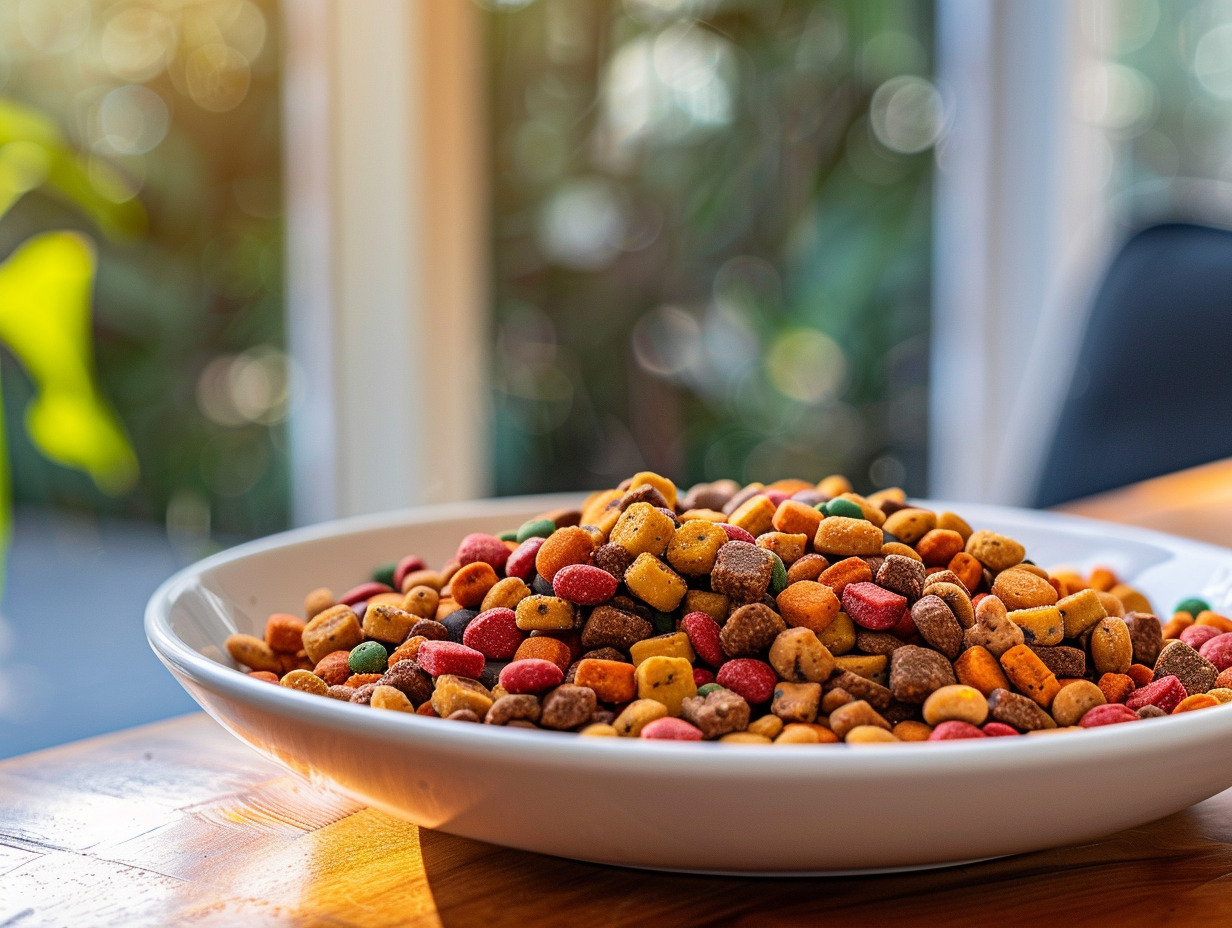
Choosing suitable kibble: health and preferences of cats
Feline health is at the heart of cat owners’ concerns, who are often tempted by the convenience of industrial kibble. If not chosen carefully, these can contribute to overweight and obesity in cats. It is essential to prioritize a diet that resembles their instinctive dietary habits, rich in animal proteins, which are necessary for their well-being.
Overweight in cats is a significant health issue. A diet too rich in carbohydrates can be a cause. Regular physical activity is also vital to maintain an optimal weight. Therefore, it is the responsibility of owners to ensure a balance between the caloric intake of kibble and the activity level of their four-legged companion. Veterinarians often advise on the amount of food to give, tailored to each cat.
A mixed diet, combining kibble and wet food, can be a solution to diversify nutrient sources and simulate a more natural diet. This approach promotes better hydration and can be more appealing to cats, who benefit from a variety of textures and flavors. Natural feeding, whether consisting of high-quality kibble or wet food, remains preferable to meet the specific needs of felines.